You paid for the fix, drove off, and felt fine about it. Then a week later that small chip started creeping into a long line across your view. A windshield repair should hold for the life of the glass, so a rushed job that fails within days leaves you paying twice and worrying every time you hit a bump. Knowing what a solid repair looks like helps you catch a weak one before it turns into a safety problem on the highway. Good windshield repair keeps your glass strong and your view clear, while a careless one quietly works against both.
Why a Poor Windshield Repair Becomes a Safety Problem?
Your windshield does more than block wind and bugs. It is a load-bearing part of your car. According to the National Highway Traffic Safety Administration, the windshield gives your cabin up to 45% of its strength in a front-end crash and as much as 60% in a rollover. It is made of laminated glass, which means two panes bonded around a plastic layer, and it works with your airbags too. On the passenger side, the airbag inflates at speeds close to 200 miles per hour and pushes off the inside of the glass to aim toward the seat. A chip that was filled the wrong way leaves a weak point that can spread and cut into that strength when you need it most.
There is a national standard for how a chip should be filled and cured, kept by the Auto Glass Safety Council, the group that sets safe repair and replacement practices in North America. A shop that follows it will treat your windshield repair as a safety job, not a quick patch. That is the bar you want your repair measured against.
What a Good Windshield Repair Should Look Like?
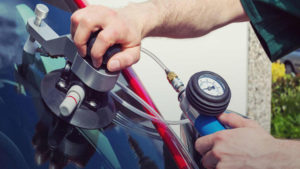
Before you can spot a bad job, you should know what a proper one looks like once the resin cures. The chip should fade until it barely shows, and your view through that spot should stay clear. The resin has to bend light almost the same way the glass does, so the area does not turn hazy or glow under oncoming headlights at night. The surface should feel smooth where the damage was, with no lumps and no trapped air.
Here are the quick things to look at right after the technician finishes:
- The chip looks faint and no longer blocks your line of sight
- No air bubbles, cloudy patches, or trapped dirt inside the mark
- The glass feels smooth where the resin filled the damage
- No leftover film, glue, or scratches around the spot
- No new noise or draft as you drive away
Timing also tells you something about the shop. A chip fills best within 24 to 48 hours of the damage, before moisture and dirt work their way inside. A technician who asks how long the chip has been there and checks for contamination is doing the job with care.
Faults That Reveal a Poor Windshield Repair
Once you know the baseline, the weak jobs start to stand out. You will notice one or more of the problems below, and each points back to a step the technician skipped or rushed.
The Damage Still Shows or Looks Cloudy
A filled chip should nearly vanish. If the mark stays dark, blurred, or discolored, the resin did not reach into the tiny cracks inside the glass. Cloudy spots or a milky look usually mean moisture or dirt got trapped before the resin went in. That trapped material blocks a proper bond, and the repair is already failing.
Air Bubbles or Uneven Resin in the Filled Spot
Air bubbles are one of the clearest tells of a rushed windshield repair. Bubbles weaken the bond between the resin and the glass, which is what holds the damage together. The finished spot should be even and flat. Lumps, ridges, or pockets of air show the resin was pushed in without proper pressure or curing.
The Crack Starts Spreading Again After the Repair
A correct repair stabilizes the chip so it stops spreading. If the line keeps stretching after a few days, especially over bumps or when the temperature swings, the resin failed to lock the damage in place. Some drivers also hear faint cracking or popping near the spot when the car flexes. That sound means the glass is still under stress. At that point, the damage may move past what a fix can handle, and cracked window repair or full replacement becomes the safer path.
Wavy or Distorted View Through the Repaired Area
A little waviness at the very edge of the glass is normal. Distortion in the area you look through while driving is not. If the repaired spot warps what you see, or throws a glare and haze when headlights hit it at night, the resin did not match the glass the way it should. This kind of flaw slows your reaction time in rain or bright light, which makes it a safety issue and not just a cosmetic one.
Leftover Residue, Scratches or a Messy Cleanup
The glass should be clean and clear when the work is done. Dried adhesive, smears, or fresh scratches around the repair point to careless work. A shop that leaves a mess on the outside often cut corners on the part you cannot see.
Can a Rushed Windshield Repair Affect Your Car’s Safety Cameras?
Many newer vehicles carry a forward-facing camera mounted behind the windshield. It runs advanced driver assistance systems, known as ADAS, such as lane departure alerts, forward collision warnings, and automatic braking. That camera reads the road through the glass, so anything in its view matters. A repair that leaves haze, pitting, or distortion in the camera zone can make the system misread lane lines or distance. You might see a warning light come on for no reason, a lane alert that triggers on a clear road, or braking that reacts to nothing.
If your damage or repair sits in the camera’s field, a careful technician will check whether the spot affects the sensor and tell you if calibration is needed. A shop that ignores the camera area, or repairs right across it without a word, is leaving your safety features to chance. On modern cars, clarity in that zone is as important for the camera as it is for your own eyes.
Also Read: How Much Does Windshield Repair Cost in San Leandro?
Some Damage Needs Replacement, Not Just a Repair
A repair has limits, and a good technician will be honest about them instead of taking your money for a fix that cannot hold. You will need full replacement when:
- The crack runs longer than about six inches
- There are more than three cracks, or a cluster of star breaks
- The damage reaches the edge of the glass, where resin cannot bond well
- The chip sits in your direct line of sight and would distort your view
- The break falls over the ADAS camera or sensor zone
The size rule is backed by research. A study in the Journal of Safety Research found that leaving cracks longer than six inches doubles the chance of sudden windshield failure. So a shop that tries to fill a long edge crack instead of recommending windshield replacement is putting cost ahead of your safety. For owners of business or fleet vehicles, this matters even more, since one weak repair copied across a row of vans turns into repeat downtime and repeat bills.
Book a Windshield Repair You Can Trust in San Leandro
A bad windshield repair does not just cost you a second bill. It leaves you driving with weaker glass, a blurred view, and safety systems that may not fire the way they should when a crash comes. Waiting on a creeping crack only shrinks your options, because a spot that could have been filled today may need a full replacement next week.
San Leandro Auto Glass Repair focuses on one thing, which is auto glass. We handle windshield repair, windshield replacement, cracked window repair, and window regulator work with trained, certified technicians and mobile service across San Leandro, so we come to your home, office, or job site. If your last repair looks cloudy, feels rough, or the crack is inching back across your view, contact us and let our team check it before it spreads into something bigger.